Each type of actuator has its own set of advantages and disadvantages that determine the most suitable applications for these devices. Based on their energy sources, actuators are classified into electric, hydraulic, and pneumatic.
In this instance, the Bawalaksana team will explain the advantages and disadvantages of electric actuators and include some essential considerations if you are planning to use this type of actuator.
Selecting the appropriate actuator for a specific task can significantly contribute to cost efficiency and productivity. Conversely, choosing an unsuitable actuator for a particular workload can result in high maintenance costs and frequent downtime.
Table of Contents
What are the advantages of electric actuators?
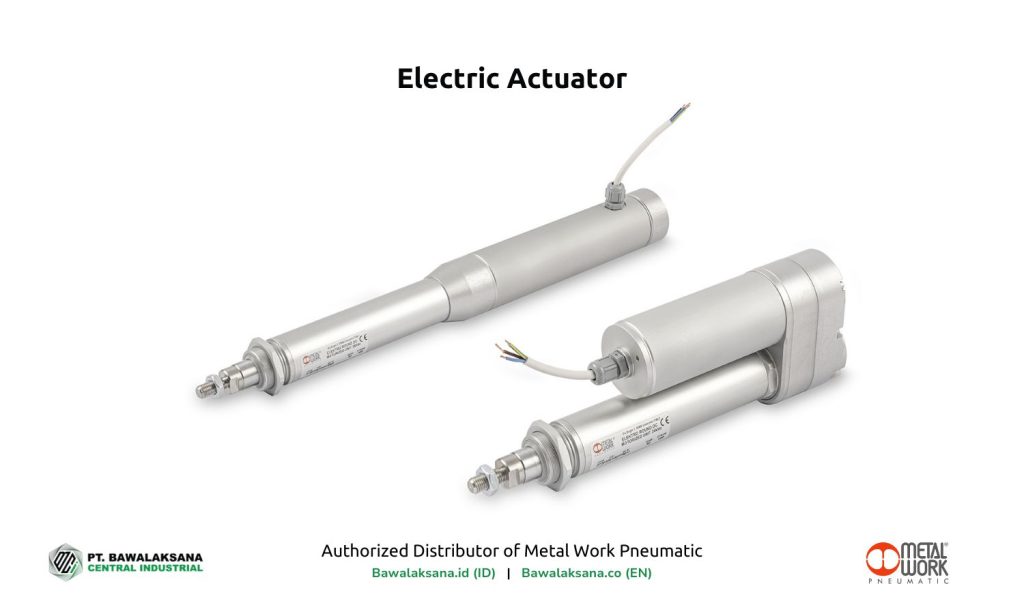
Electric actuators offer several advantages, making them a preferred choice in various applications.
One key benefit is their remarkable precision in reaching any desired point, ensuring accurate positioning.
In addition, electric actuators are known for their exceptional efficiency, providing optimal performance while minimizing energy consumption.
The ability to control and adapt to different operating conditions further enhances their versatility. As JHFOSTER highlights, some of the advantages of electric actuators include:
Efficiency and Energy Saving
Electric actuators are advanced devices that provide highly accurate and precise control over various mechanical systems.
These actuators can coordinate the movement and positioning of different components in an automated system, making them ideal for use in various industrial and commercial applications.
Electric actuators can improve efficiency and reliability in operations, helping to save energy and costs in the long run.
Control and Positioning
Electric actuators are devices that can control the movement of a mechanism or system. They are designed to provide precision and accuracy and can be programmed to stop at any desired position. This is made possible by the integration of various components, including a motor, a lead screw, a shaft, and limit switches.
The motor is responsible for generating the necessary torque and rotation to move the mechanism, while the lead screw converts the rotational motion into linear motion.
The shaft connects the motor to the lead screw and allows for the transfer of torque. In addition, limit switches are installed to ensure the actuator stops at the desired position, preventing any potential damage or overloading of the mechanism.
These components work together to deliver reliable and precise control of a mechanism or system’s movement.
Low Operating Costs
Electric actuators offer several advantages over pneumatic and hydraulic actuators. One of the most notable benefits is electric actuators’ relatively low operational cost.
This cost-effectiveness is because electric actuators do not require any fluid, air, or pressurized liquid to function. This also makes electric actuators more environmentally friendly than their hydraulic counterparts.
In terms of efficiency, electric actuators consume less energy than pneumatic and hydraulic actuators, making them a more energy-efficient option.
However, it is essential to note that the function of each actuator can vary greatly, and each type of actuator has its own set of advantages and disadvantages.
Therefore, it is essential to consider the application’s specific needs when selecting the appropriate actuator type.
Adaptability and Flexibility
Electric actuators are known for their high adaptability, as they can be reprogrammed using the software. This makes them an ideal choice for various production processes.
Electric actuators’ versatility allows them to be used in producing a wide range of products, including automobiles, medical equipment, industrial machinery, and robotics.
Electric actuators are designed separately between electronic components and actuators, which helps to minimize the cost of replacing spare parts and increases the ease of maintenance.
Electric actuators are also highly reliable and efficient, making them popular in many industries.
Using electric actuators in production processes increases the process’s speed and accuracy and leads to significant long-term cost savings.
Low Risk of Contamination
Electric actuators offer several advantages over their hydraulic and pneumatic counterparts, including their low contamination risk.
Electric actuators do not require any fluid to operate, eliminating the risk of fluid leaks that can pollute the environment.
Additionally, most electric actuators also come equipped with wipers or other sealing components, which not only help to keep contaminants out but also provide different levels of Ingress Protection (IP), depending on the brand.
These features make electric actuators a safe and environmentally friendly option for various manufacturing applications.
Minimal Maintenance
One key advantage of low maintenance in electric actuators is that it contributes to overall efficiency and helps minimize the risk of contamination.
Minimal maintenance contributes to minimal human contact with the actuator and reduces the likelihood of contamination from dirty hands or other external factors.
Additionally, electric actuators have a longer usage cycle with minimal maintenance than their pneumatic or hydraulic counterparts.
Less maintenance means less wear and tear on the actuator components, resulting in a longer lifespan and lower overall costs.
Low maintenance is critical when selecting an electric actuator, as it can significantly impact performance, safety, and profitability.
Disadvantages of Electric Actuator
Electric actuators are highly beneficial for various industrial and commercial applications. They are efficient, reliable, and offer high-precision control.
However, like any other electronic device, they have some limitations and disadvantages that must be considered.
One of the primary drawbacks of electric actuators is their vulnerability to harsh environmental conditions.
For instance, their functionality might be impacted if installed in dusty or humid areas or exposed to intense sunlight.
Electric actuators may not be suitable for extreme temperature and humidity changes, as these can damage the actuator’s internal components.
It is crucial to note that the disadvantages of electric actuators can be mitigated by proper planning and implementation.
For example, one can protect the actuator by installing it in a sealed enclosure or using dust covers.
Similarly, one can avoid exposing the actuator to extreme conditions by conducting a thorough environmental analysis before selecting the actuator.
By taking these steps, the actuator’s function can be optimized, and the internal components can be protected from damage, ensuring that the actuator provides reliable and efficient performance over an extended period.
Below are some drawbacks of electric actuators:
Higher Initial Cost
Electric actuators are advanced devices that use electrical power to perform linear or rotary motions. These actuators offer advantages over traditional pneumatic and hydraulic actuators, such as better precision, speed, and control.
However, they also come with a higher initial equipment cost due to the complexity of their electronic components and the need for experienced technicians to monitor and maintain their performance over time.
Specifically, electric actuators’ electronic components are highly sophisticated and require specialized knowledge and expertise to install, configure, and troubleshoot.
Moreover, continuous monitoring of these actuators is essential to ensure they operate safely, efficiently, and reliably. This requires competent and well-trained technicians who promptly detect and address any issues.

Sensitivity to Vibration
Electric actuators are complex mechanical devices that convert electrical energy into mechanical motion. They are widely used in various industrial applications, such as valves, pumps, and other automated equipment.
However, these actuators are often sensitive to vibrations, significantly affecting their performance and accuracy.
Electric actuators are sensitive to vibrations for several reasons. One of the main reasons is the wear and tear of mechanical components, such as gears, bearings, and couplings.
Over time, these components can become loose or damaged, causing excessive vibration and affecting the actuator’s performance.
Another reason why electric actuators are sensitive to vibrations is improper installation processes. If an actuator is not installed correctly, it can cause misalignment, leading to excessive vibration and decreased accuracy.
Furthermore, electric actuators consist of precision components such as motors and sensors sensitive to vibrations. Even minor vibrations can affect these components, resulting in accuracy deviation and reduced lifespan.
However, with the advancement of actuator technology, most of the latest-generation products are already equipped with vibration dampers. These dampers are designed to reduce the impact of vibrations on the actuator’s components, ensuring smooth and accurate operation.
Electric actuators can provide reliable and precise performance in various industrial applications with the proper installation and maintenance.
Overheating Risk
Electric actuators are commonly used in various industries to control the movement of valves, dampers, and other mechanical devices. However, they can become too hot and overheat for several reasons, such as excessive load, improper voltage supply, lack of air ventilation, or poor surrounding environment.
Excessive load is a common cause of overheating in electric actuators. If the load is too heavy or the device is working beyond its rated capacity, the motor can overheat and eventually fail.
Similarly, if the voltage supply is too high or too low, the motor can overheat and damage other components.
Another reason for overheating is the lack of air ventilation. Electric actuators use airflow to dissipate heat and cool the motor and other components. If the device is located in an enclosed space or has limited airflow, the temperature can rise and eventually lead to overheating.
Lastly, the surrounding environment can also affect the temperature of electric actuators. If the device is located in a hot or humid environment, the temperature can rise and lead to overheating.
It is crucial to anticipate and manage the risk of overheating in electric actuators. Proper maintenance and monitoring can help prevent overheating and prolong the device’s life.
Speed and Thrust Limitations
Electric actuators are a common type of linear motion device that is powered by electric motors. These motors convert rotational motion into linear motion, allowing the actuator to move straight. However, these actuators have certain speed and thrust limitations that are important to consider.
When an electric actuator is set for high speed, its thrust or torque decreases. This is because the electric motor is designed to rotate at a certain speed, and when it is set to move faster, it loses some of its torque.
Conversely, when an electric actuator is set for low speed, its thrust or torque becomes more significant because the motor spins more slowly, allowing it to generate more torque.
This is due to the actuator’s gear ratio, which is the ratio of the number of teeth on the driving gear to the number of teeth on the driven gear.
The larger the ratio, the greater the torque, but the slower the movement. This has the same principle as a two-wheeled motorbike with a manual transmission.
In a motorbike, the rider can shift gears to change the gear ratio and increase the bike’s speed or torque. Similarly, in an electric actuator, the gear ratio determines how much torque the motor can generate at different speeds.
It’s essential to consider electric actuators’ speed and thrust limitations when selecting them for a particular application. By understanding how these actuators work, you can choose the correct gear ratio and motor speed to optimize their performance.
What are some suitable applications for electric actuators?
Actuators are devices that convert energy into motion. While each actuator has advantages and disadvantages, it is essential to understand where and how to use them to harness their full potential.
Electric actuators, in particular, can be used in a wide range of applications as long as the surrounding environment is considered. This can extend their lifespan and make them more durable.
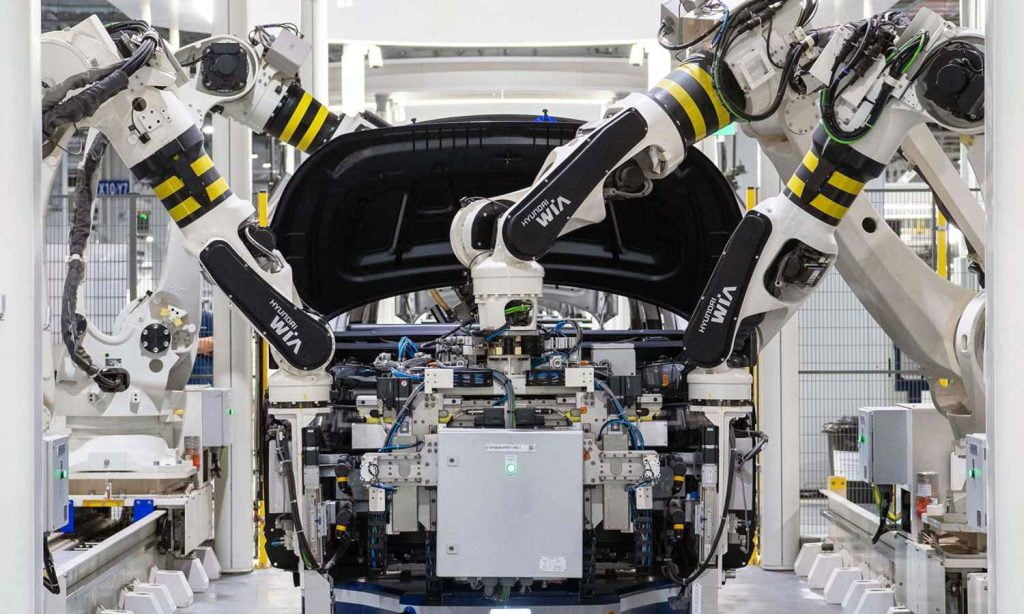
Electric actuators are commonly used in various fields, including robotics, food and beverage manufacturing, smart homes, and industrial automation. These devices offer a reliable and efficient way to control motion, making them popular in many industries.
Integration with PLC
Electric actuators are widely used in various industries due to their ability to be controlled by electrical signals.
When used with Programmable Logic Controllers (PLCs), electric actuators can be precisely controlled to move to specific positions based on the input and logic programmed into them.
This feature makes them ideal for manufacturing processes where PLCs can work with sensors to determine if a specific part has been installed correctly.
Once installed, the PLC sends a command to the electric actuator to move and perform an action on that part, such as welding or assembling the next part.
After completing the action, the PLC sends another command to the actuator to return to its original position and prepare for the next task.
In industries such as F&B, cement, and glass, PLCs and electric actuators can work together to control the composition of products based on the desired proportions.
Integrating PLCs and electric actuators can significantly automate and streamline industrial processes, contributing to greater efficiency and productivity.
Easily reprogrammable
Incorporating electric actuators with a programmable logic controller (PLC) is crucial to ensuring their adaptability and versatility. You can either modify the I/O (input/output) module or tweak the PLC program code by reprogramming the electric actuators.
This reprogramming enables electric actuators to carry out various industry tasks. Furthermore, they can be customized based on the type, nature of work, and form of the desired product.
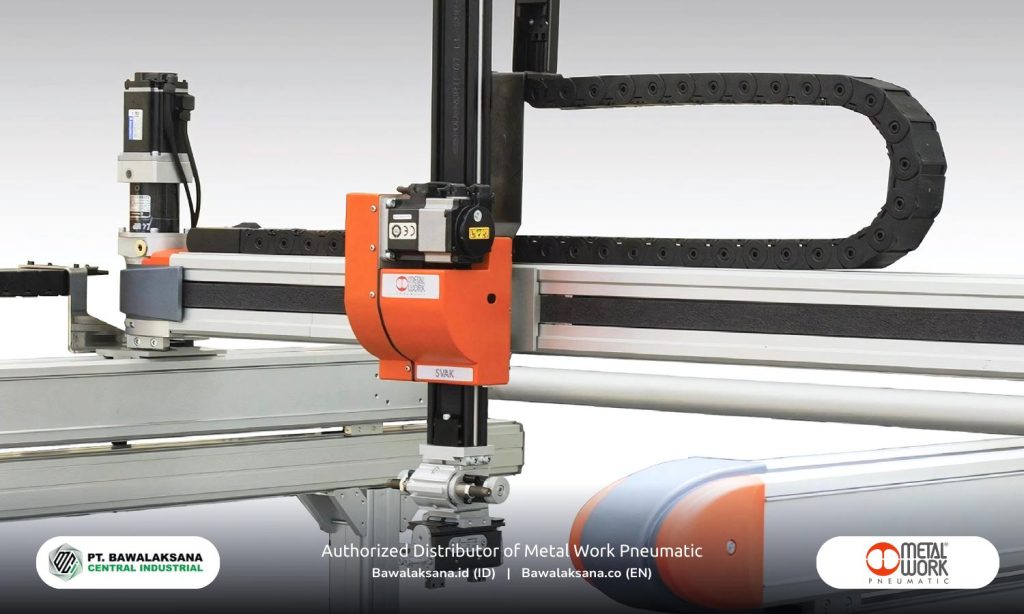
Important things to consider for electric actuators
Several things need to be considered for electric actuators to work well and have a long lifespan. The following are some notes that need to be taken into account:
Not suitable for all environments
Electric actuators are widely used in various electronic products, but their performance largely depends on power supply, cables, and conductors. These components are prone to damage in extreme conditions such as dusty environments, high temperatures, and humidity.
This can lead to frequent maintenance and reduced lifespan of the product.
To avoid such issues, pneumatic or hydraulic actuators should be used in harsh and extreme environmental conditions. These actuators are better equipped to handle such situations and offer better durability and reliability.
So, if you are looking for a reliable and efficient actuator for extreme conditions, it is best to opt for pneumatic or hydraulic actuators.
Initial investment that is considered expensive
The decision to introduce automation systems heavily depends on the investment value, which is the estimated return the company can achieve by implementing automation processes.
A company must consider several factors, such as the cost of automation, the expected increase in production, and the expected ROI (return on investment) over time.
Transitioning from manual processes to automation is challenging and requires considerable effort.
Therefore, companies must plan well and ensure proper implementation of the automation systems. This will help the company increase the production scale multiple times than usual, which can be a significant advantage in the competitive market.
The expected ROI ratio is a crucial factor that companies must consider while implementing automation systems.
The expected ROI ratio should be such that the company can achieve a significant return on investment within a specific timeframe. This will help the company to ensure that the investment in automation systems is worth the effort and cost.
Therefore, planning, implementing, and evaluating the automation systems to achieve the desired ROI ratio is crucial.
Utilizing technology to enhance production levels
Technological advancements have been a driving force across various industrial sectors. Implementing automation systems in these sectors has been widespread, and such systems have undergone significant evolutions.
According to Techbriefs, the application of Industry 4.0 has transformed conventional mechanical actuators into integrated systems with embedded microelectronics. Such integration has facilitated actuator control and design flexibility, simplified installation, diagnostics, and maintenance, and enabled automation on various axes previously operated manually.
As wise individuals, we view this evolution as an opportunity to enhance the competitive advantage of companies in the production sector.
Electric actuators may be ideal if proper analysis is conducted and production efficiency is considered in the long run.
The question is, is your company ready to become a pioneer in implementing electric actuators to run production automation systems?
If so, we fully support your plan and are ready to provide professional technical and non-technical support.
Our sales engineering team at PT Bawalaksana Central Industrial is happy to assist you if you have any questions about choosing an electric actuator suitable for your company.
We are the authorized distributor of Metal Work Italy, offering a wide range of electric actuators for industrial automation systems. Metal Work is a pioneer in advanced pneumatic devices and components and a leader in cutting-edge automation technology.
As an authorized distributor, we can deliver comprehensive solutions for your company, ensuring the seamless implementation of modern, tech-integrated industrial automation systems.
We can provide the best recommendations for designing automation systems to improve cost-efficiency and productivity.
Please consult our professional team and get the best tips to enhance efficiency in industrial automation systems.

Romanta Pinrih Linuwih
Pneumatic Automation Systems Expert
This article was written in collaboration with Romanta Pinrih Linuwih, an expert in Pneumatic Automation Systems, to ensure accuracy and high quality insights.


![10+ Examples of Pneumatic Tools in Daily Life and Industry [2025]](https://bawalaksana.co/wp-content/uploads/2025/05/Sandblasting-large-diameter-pipes-to-remove-surface-contaminants-1080x675.jpg)